
Website Articles

Website articles that have something to say.

SENATORE creates research-driven articles for companies that have expertise but don't have the editorial capacity to publish it consistently.

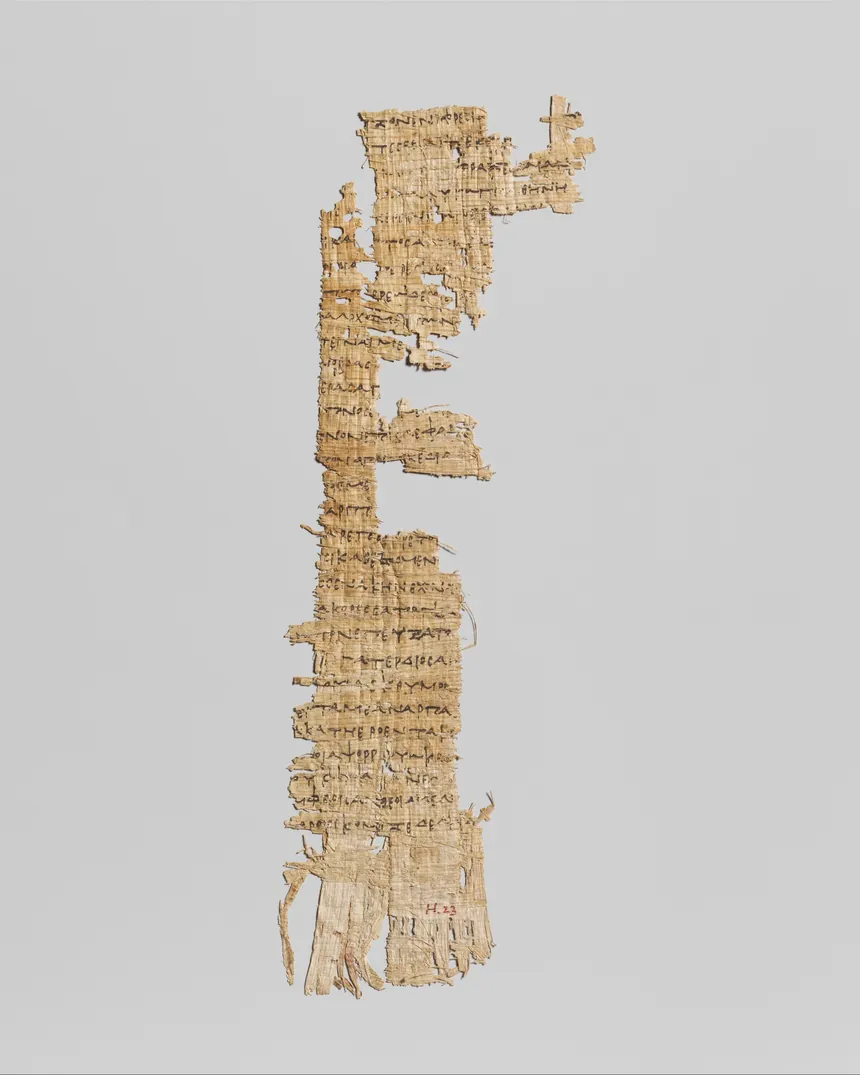
A fragment of ancient papyrus carrying lines from Homer's Odyssey, its Greek text still legible between the frayed fibres.
Papyrus fragment with lines from Homer's Odyssey. Public domain, The Metropolitan Museum of Art, Open Access (CC0).

Who it is for

  • B2B and SaaS companies whose subject-matter experts are already talking about the work
  • professional-services firms that publish nothing because nobody has the hours
  • technical companies whose best explanation currently lives in an internal document
  • founders and executives who speak well and write rarely

The problem

“We know what we want to say, but nobody has the time or editorial skill to turn it into consistently excellent content.”

What we do about it

  • We interview your experts and keep the recording, so the expertise is captured rather than borrowed.
  • We research the topic against primary sources and build the argument before writing a sentence of it.
  • We write the article to be published under your company's name, or your own.
  • We show you the structure before the draft, so you approve the reasoning, not just the prose.

What this covers

  • SEO articles
  • expert articles
  • industry analysis
  • educational articles
  • thought-leadership articles
  • long-form blog content
  • pillar pages
  • technical articles
  • research-driven articles

What you receive

  • A publication-ready article in your house style, with sources attached per claim
  • The structural outline you approved, revised to the final version
  • Image and internal-link suggestions where the piece needs them
  • One revision round included; further rounds priced in the engagement
Pricing. From $290 for a single article of 1,200–1,500 words, research and one revision included. Four-article sprints from $990. Monthly programmes from $1,290.

The process

How a piece gets made.

  1. Brief

    We learn the business, the audience, the subject and the objective. You tell us what the piece has to achieve before we discuss what it should say.

  2. Interview

    When the expertise lives inside the company, we extract it through conversation. The recording and the transcript stay with the engagement.

  3. Research

    We verify claims, research sources and build the argument. Anything that cannot be sourced gets flagged, and then either sourced or cut.

  4. Draft

    We write the article, the copy or the ghostwritten piece, against the structure you approved rather than against a blank page.

  5. Editorial pass

    We tighten structure, language, evidence and voice. Every substantive cut is explained, so you can disagree with the reasoning.

  6. Approval

    The client reviews the final piece. Nothing is published anywhere under your name without your written approval.

  7. Publish

    The finished work goes to your website, publication, newsletter or byline, ready to use as delivered.

Read the full process, step by step

Selected editorial examples

What an editorial pass changes

Demonstration

Before — demonstration

In today's rapidly evolving threat landscape, organisations of all sizes face an unprecedented array of challenges when it comes to protecting their sensitive data. Our cutting-edge, best-in-class solution leverages industry-leading technology to deliver a comprehensive, end-to-end approach that empowers businesses to stay ahead of the curve.

After — demonstration

Most credential-theft breaches do not begin with a clever attack. They begin with a password that one person reuses across a work account and a personal one, and a login page that never asks for a second factor. The attacker does not need to break your defences; they need to find the one door your own rules left open.

That is why the useful question is not how strong is our security stack but which accounts can be reached with a password alone. Answer that and you have a list you can work through in a week.

What changed, and why

  • A clearer argument: the second version makes one claim and supports it
  • A stronger opening: a concrete situation instead of a category announcement
  • Evidence where it belongs: the mechanism replaces the adjective
  • Better rhythm: sentence lengths vary because the thought does, not for effect
  • Less generic language: no phrase could survive being moved to another vendor's site
  • A stronger conclusion: it leaves the reader with an action, not an impression
Demonstration material. SENATORE has not published these pieces for a client. They are written to show the difference an editorial pass makes, and are labelled DEMONSTRATION wherever they appear. No client, result or testimonial is being claimed. Genuine examples will replace them as engagements permit publication.

See all selected examples

FAQ

Common questions

What exactly do you write?

Articles for company websites, SEO content, thought leadership, case studies, reports, newsletters, conversion copy and books. Website articles are the core of the studio's work; everything else is an extension of the same editorial process.

Can you write about technical subjects?

Yes, provided we can interview someone who knows the subject. We research the surrounding literature to ask better questions, but we do not present ourselves as the expert. When a claim needs a source, it gets one or it gets cut.

How do you learn our company's expertise?

We start with a recorded brief on the business, the audience and the objective, then interview whoever holds the knowledge. The transcript and the phrase log stay with the engagement, which is how a second article sounds like the first one.

Will the article be optimised for SEO?

It can be. We map the topic to a search intent and a cluster before writing, then write for the reader first. SEO is a structural decision in our work, not a keyword pass bolted on at the end.

Who owns the finished work?

Copyright ownership and transfer are defined in the client agreement. The website does not promise a transfer the contract has not actually made; ask for the clause and it will be in the proposal.

Can we start with one article?

Yes. A single article is a complete engagement. Plenty of clients stop there, and a monthly programme is simply the same process repeated with an editorial calendar over it.

Start with one article.

Send us the topic and we will tell you honestly whether it is an article we should write, and what it would take.

Related services

SEO & Content

Keyword research, search intent, topic mapping, content clusters and on-page recommendations — with the writing to carry them.